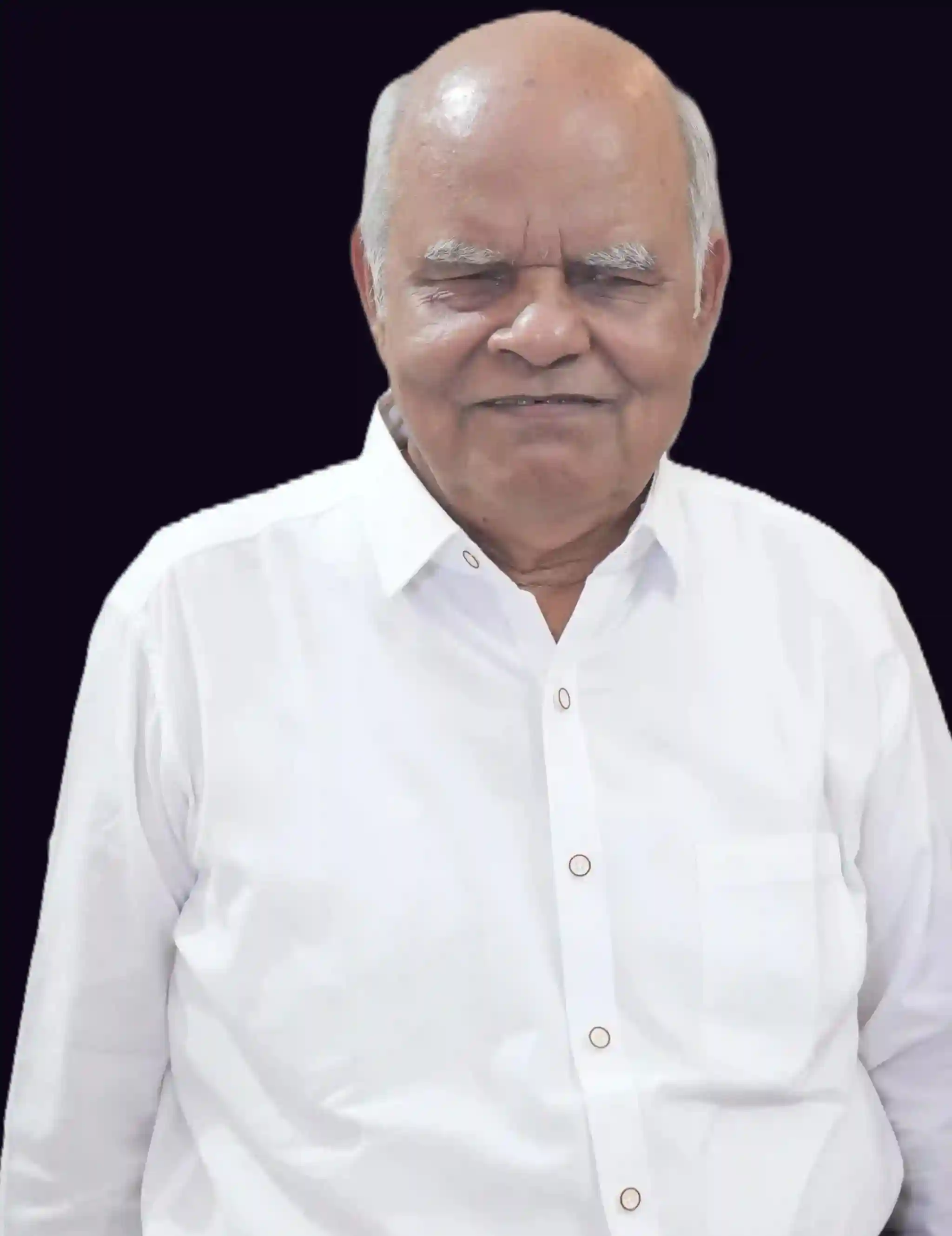
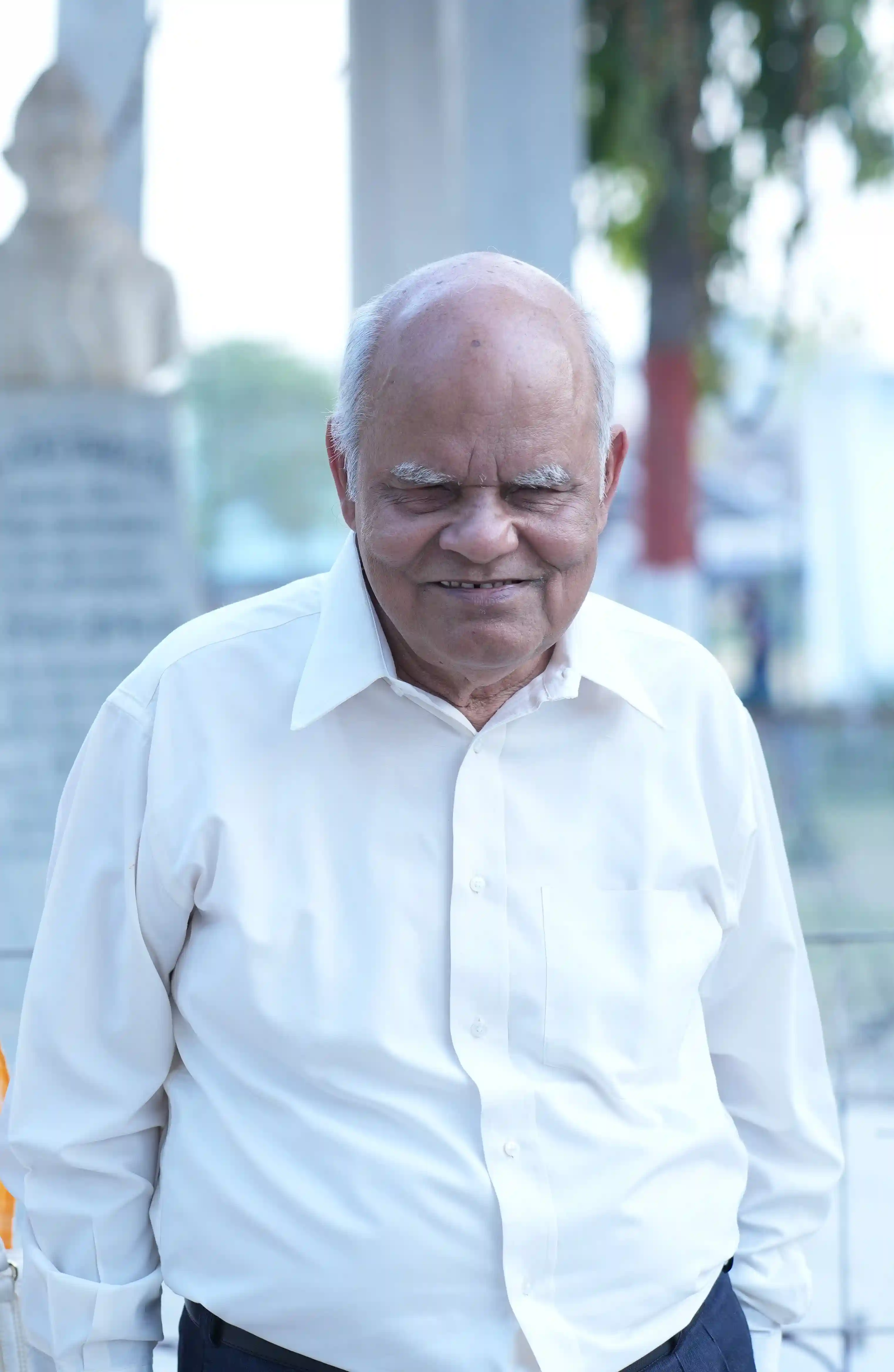
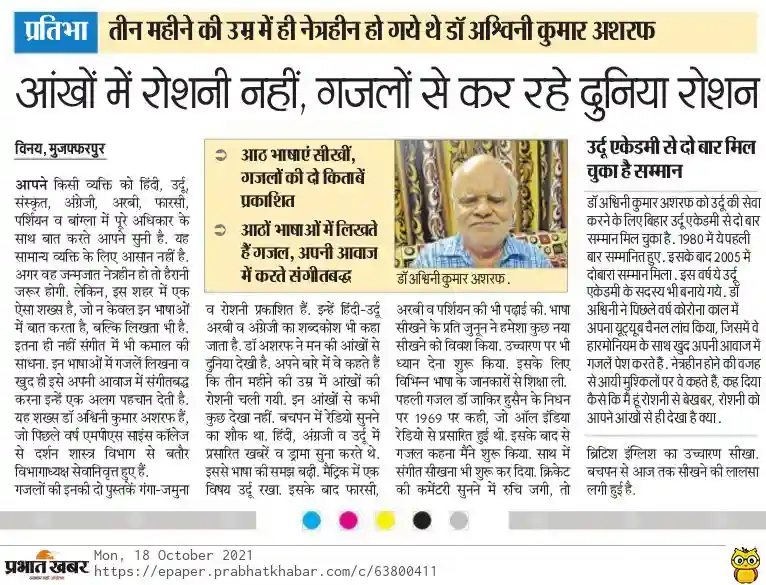
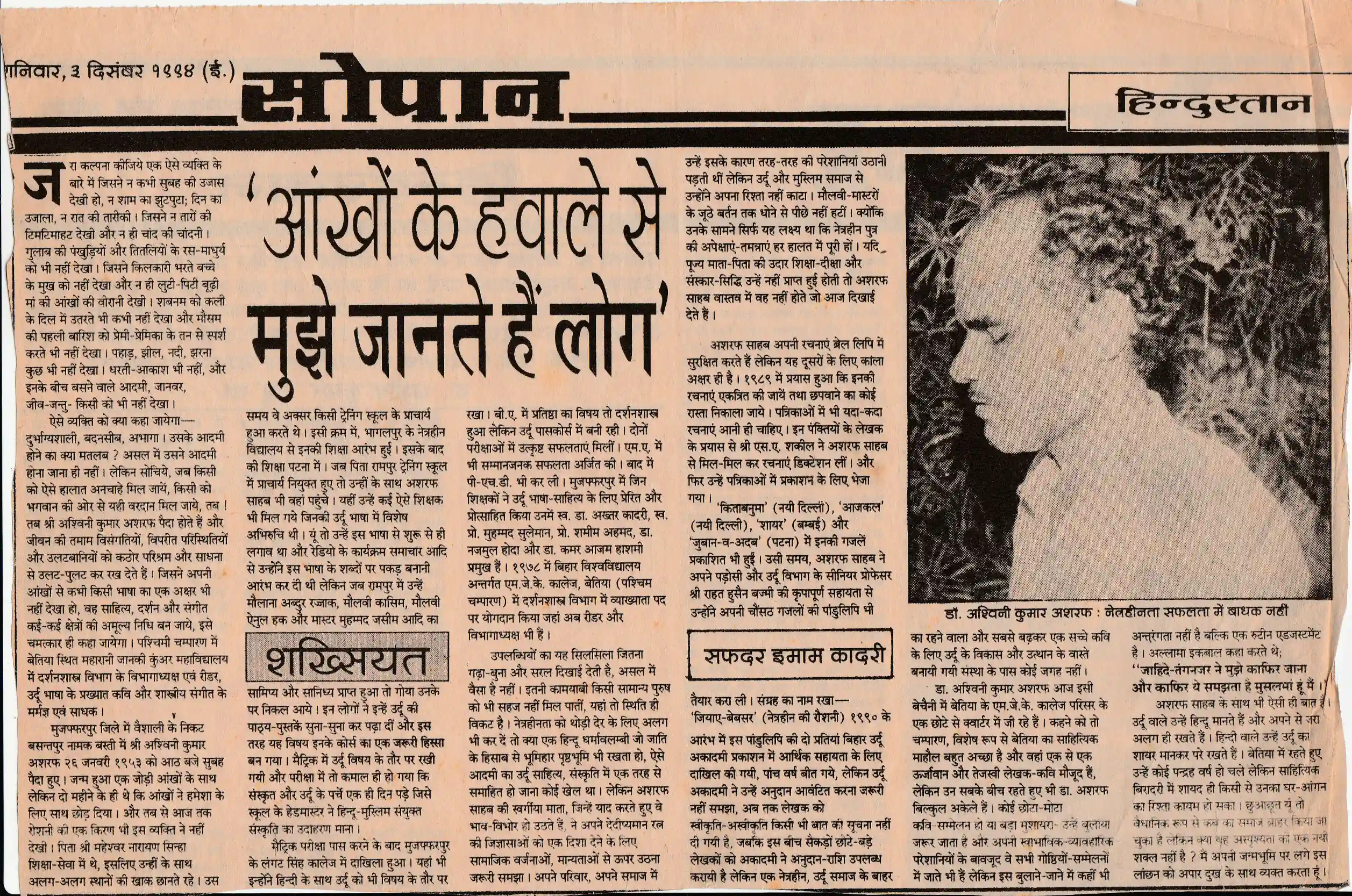
Some lives shine because they are placed in the spotlight. Others shine because they generate their own light. Dr. Ashwini Kumar Ashraf belongs to the second kind.
Born in 1952 near Vaishali, Bihar, he lost his sight within months of birth. Yet this absence of vision became the very source of his deepest insight. Where others looked, he listened. Where others reacted, he reflected. Where others hurried, he deepened.
Darkness is not the absence of sight. It is the absence of awareness.
— Dr. Ashwini Kumar Ashraf
His relationship with the world was built entirely through sound, language, tone, and emotion. Words were not merely tools of communication — they were instruments of discovery. From a young age, he pursued not quick answers but foundational questions: What is truth? What is justice? What constitutes a meaningful life?
These were not abstract inquiries. They were personal. They were necessary.
The Scholar's Path
Dr. Ashraf pursued his education with uncommon distinction. He graduated in Philosophy from Langar Singh Mahavidyalaya — ranking at the top of all of Bihar University. His intellectual hunger was not driven by competition, but by compulsion — the compulsion to understand.
In 1981, he joined as Professor of Philosophy at MJK College, Bettiah, under B.R. Ambedkar Bihar University (BRABU), Muzaffarpur — a position he would hold with distinction for decades. In 1989, he earned his PhD from Bihar University, while simultaneously publishing his first ghazal collection, Jiya-o-Behbar.
For him, philosophy was never just a subject to be taught. It was a discipline of integrity. He did not teach students what to think. He taught them how to think — how to examine assumptions, hold contradictions, and resist easy conclusions. Students often recall that his greatest gift was not information, but perspective. He made ideas feel alive.
The Poet's Voice
Parallel to his academic journey, another expression took shape — poetry. Dr. Ashraf's literary work is not ornamental. It is essential.
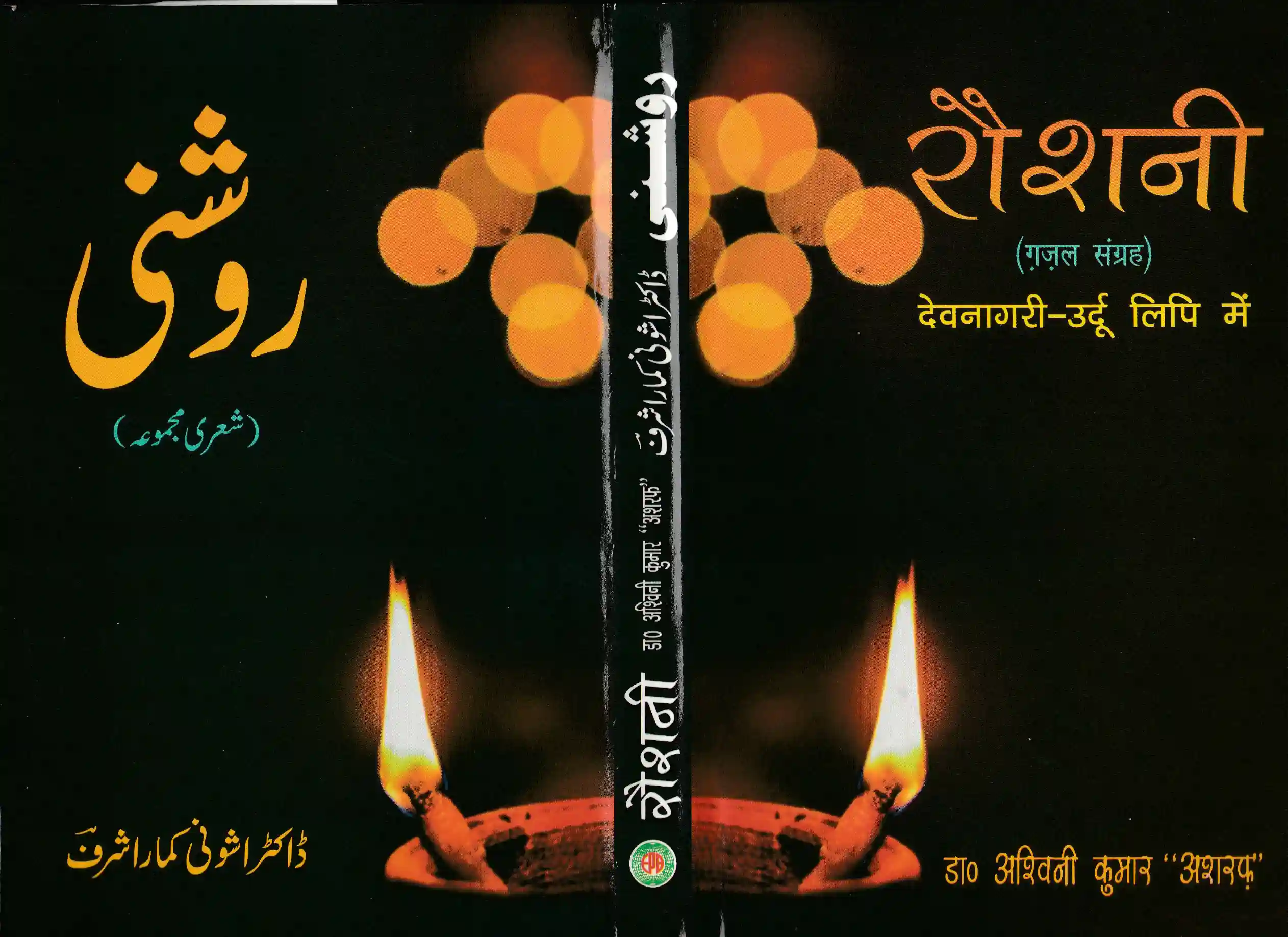
His landmark work, Raushni (meaning Light), exists in both Hindi and Urdu — not as translations of each other, but as entirely distinct creative works. Each language version carries different compositions, different emotional registers, and different rhythms of reflection. This is not bilingual writing. It is bicultural thinking.
Vision is not a function of the eyes. It is a function of the mind.
— Dr. Ashwini Kumar Ashraf
In his poetry, light is not a physical phenomenon. It is moral clarity. It is awareness. It is the courage to remain sensitive in a hard world and honest in a complex one. His verses do not shout. They stay.
A Philosophy of Dignity
What distinguishes Dr. Ashraf is not merely what he has achieved, but how he has achieved it. He does not perform his struggle. He does not market his limitation. He does not dramatize his identity.
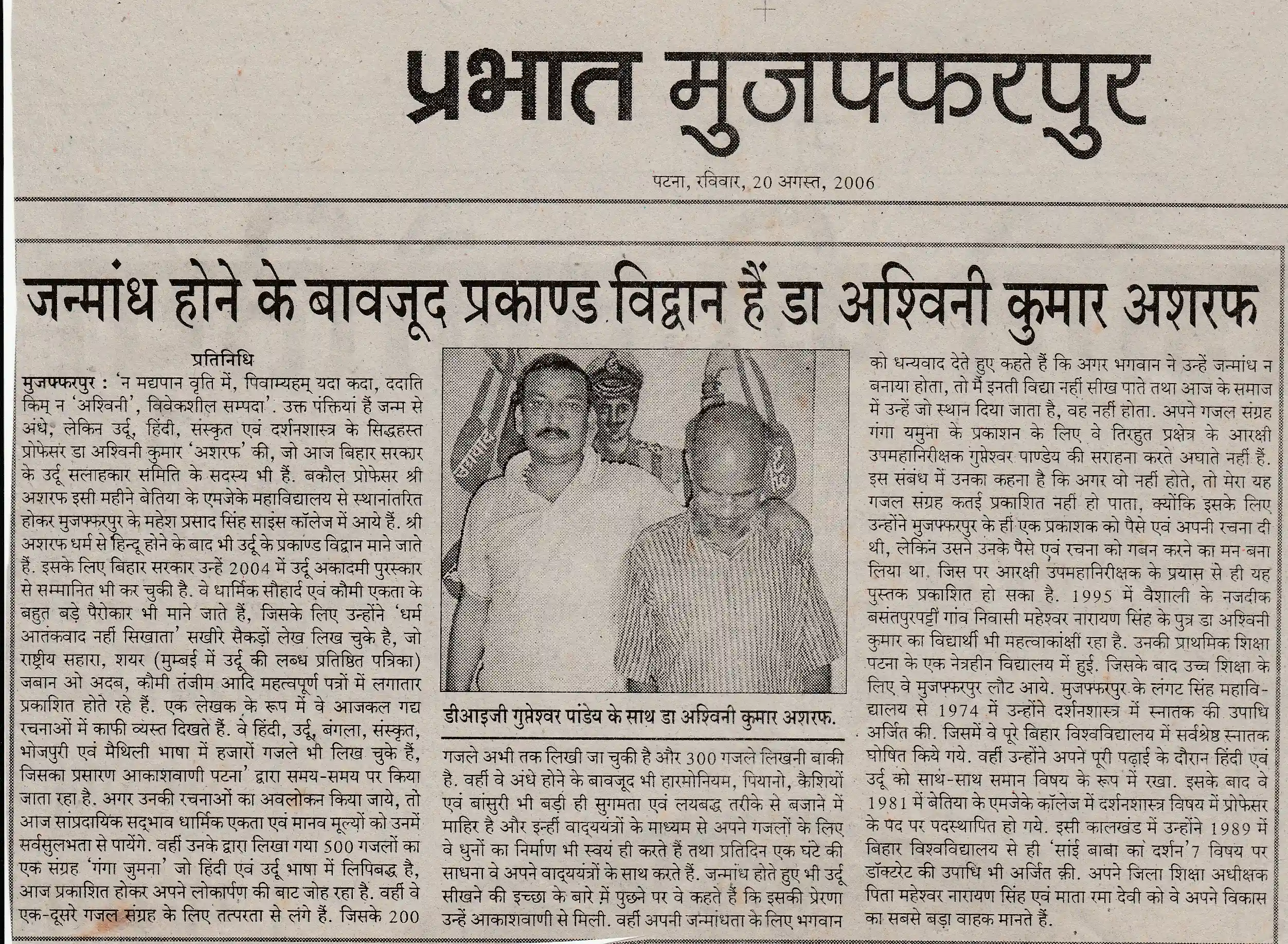
He has been featured in Dainik Jagran, Dainik Bhaskar, Prabhat Khabar, and Prabhat Muzaffarpur. He has appeared on All India Radio, DD Bihar, DD News, and ETV Bihar. He has been invited to speak at the Khuda Bakhsh Oriental Public Library in Patna — one of India's most prestigious heritage institutions.
He has received recognition from the Governor of Bihar and the Chief Minister. The Bihar Urdu Academy honored him in both 2004 and 2005.
Yet through all of this, he carries his life with a quiet, steady dignity. His influence comes not from volume, but from clarity. Not from assertion, but from alignment.